
Playing the Wanderer: your job in the group
Aspecto: Los humanos atrapados en los Backrooms. En el juego controlamos a un Wanderer con el traje protector amarillo.
Comportamiento: This is not an enemy entry. It is the reminder that every “safe” route only works when the person holding the flashlight, the item, or the next clue is still with the team.
Nivel de amenaza: 1/5 — The best Wanderer is rarely the fastest player. It is the one who can say where the team is, what was already checked, and what happens if the next door turns bad.
Avistado en: 2 rutas documentadas.
Where team coordination changes the route

The opening minute is where the team becomes a team
The first rooms in a run often feel safe enough to improvise. That is exactly when teams create the problems that show up ten minutes later: nobody says which branch was checked, two players collect the same kind of item, and the one person who saw the useful landmark assumes everyone else saw it too.
Our practical rule is to say the destination before moving, even when the movement looks obvious. “Back to the elevator,” “meet at the locked gate,” and “left hall is cleared” sound small, but they create a shared map that survives a chase, a death, or a sudden puzzle reset.
That is why the Level 0 route starts with stable landmarks rather than asking players to memorise every yellow corridor.
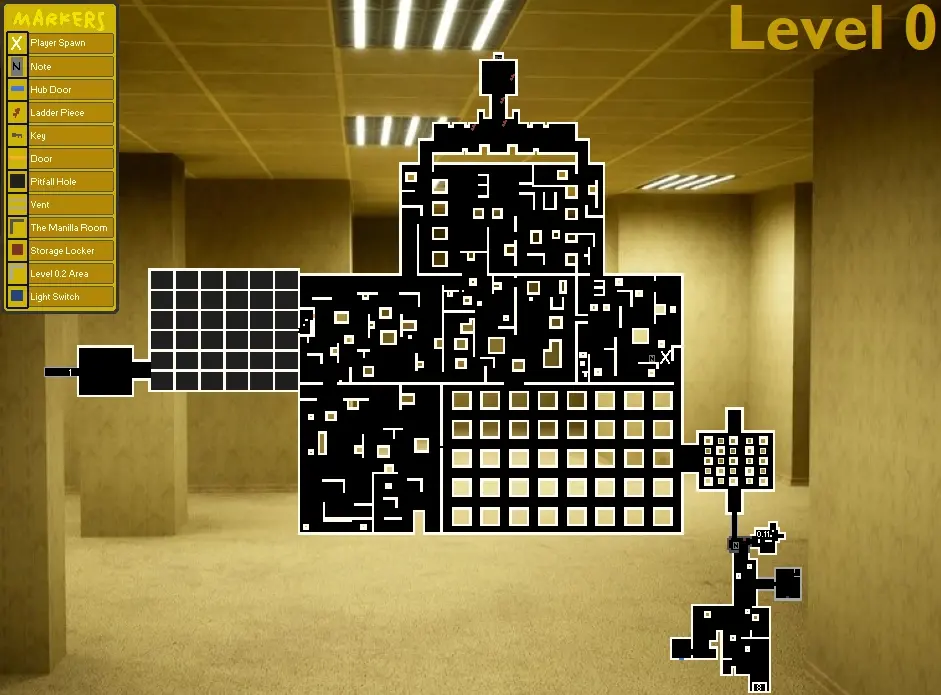
Item hand-offs are route decisions
A key, tape, fuse, or clue is not just inventory; it determines which player can safely advance the next objective. If that player is separated, everyone else begins guessing. The clean approach is to name the holder and the destination as soon as the item is found.
When the carrier is being chased, the team should not keep issuing new puzzle instructions. First confirm whether the item stayed with the carrier and where the carrier will regroup. That is the difference between a recovery and a full re-search of rooms that were already solved.
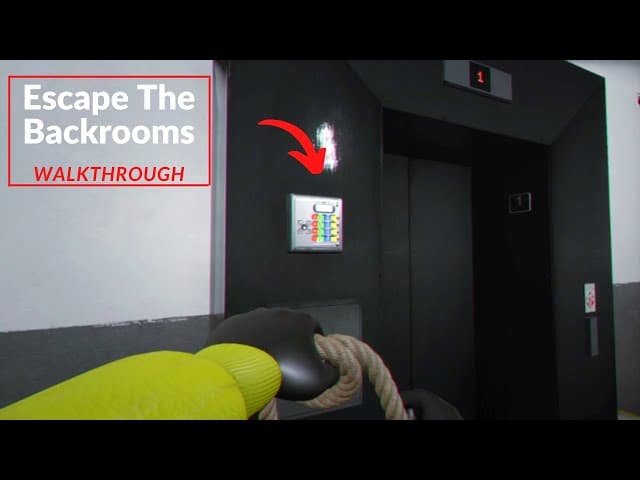
Recovery is a skill, not a reset button
After a chase, players often resume from the first familiar doorway they see. That is how groups walk past a completed objective or re-enter the same dangerous branch. Take a short reset: identify the last confirmed landmark, the unfinished task, and the player carrying the progress item.
This is especially useful in routes where silhouettes and voices are no longer enough to identify a teammate. A good Wanderer protocol gives the group a place to reunite and a quick check to use before anyone commits to the next floor or door.
The Level 1 regrouping route uses the same principle: reunite at a named location before trusting the next floor transition.
Keep the group readable under pressure
Choose one caller for the current objective. Others report only useful changes: an entity sighting, a found item, a locked route, or a completed task.
Lo que arruina la partida: Treating co-op as four solo runs. It feels faster until one player carries the required item into a chase and nobody knows which room was cleared.
How Wanderers prevent route drift
Úsalas como una comprobación breve. Describen decisiones antes, durante y después del encuentro, no un guion rígido.
Before a puzzle room
En solitario: Name the room in your own head, then identify the one object that moves progress forward. That small habit prevents the familiar loop of rechecking a solved room after a chase.
Cooperativo: Assign a caller and an item holder before interacting. The caller says the next destination; the item holder confirms that the required key, tape, or clue is actually in the group.
When the route splits
En solitario: Choose the branch with a return landmark. A route you can describe backwards is safer than the branch that merely looks shorter.
Cooperativo: Split only for a defined job and give both pairs a return trigger: “back at the elevator after the paper” is much better than “meet up soon.”
After an entity sighting
En solitario: Do not resume the route from memory after hiding. Re-orient at the last door, switch, or sign you can confirm.
Cooperativo: The first player out of danger calls whether the objective item is still with the group. Losing track of that is how a clean escape becomes another full sweep.
Routes that reward clear hand-offs
Escape the Backrooms: Nivel 0
Every player begins as a Wanderer and learns the first shared landmarks in the Lobby.
Mejor respuesta: There is nothing to evade. Agree on the ladder or exit landmark before players search separate branches.
Abrir guía del nivel →Encuentro 02Escape the Backrooms: Nivel 1
Split floor searches make the player character part of the information problem: one person may hold the key or route call everyone needs.
Mejor respuesta: Choose a regrouping door and use the same identity check after every split.
Abrir guía del nivel →Before the team splits again
- Was the next landmark said out loud before the team moved?
- Did the player with the objective item remain identifiable during the chase?
- Can every player name one safe return point from the current room?
Wanderer coordination questions
Respuestas rápidas cuando una regla general necesita convertirse en una acción concreta.
Should the group always stay together?+
No. Stay together for transitions, timers, unknown rooms, and recovery. Split for a short named search only when everyone has a return landmark and the objective does not depend on carrying several items between players.
Who should carry objective items?+
Give them to the player who is least likely to wander off—not necessarily the best runner. The holder should call the item immediately after a chase, before the group assumes a door or puzzle can be finished.
What is the fastest useful callout?+
Use one noun for the threat or task, one direction, and one landmark: “Bacteria left, vent room,” or “key found, back at gate.” It is enough for players to act without talking over one another.
Why do co-op runs feel slower after a death?+
The loss is often not the player count; it is lost context. Stop for ten seconds, say the last confirmed objective and landmark, then resume. That is quicker than having the survivors each rebuild the route separately.